
ScrapPS-001
PP Raffia Scrap
Raffia Grade
Colours: Natural, White, Colour, Black
Key specs: MFI, Contamination, Moisture
Used in: Packaging, Agriculture, Industrial
Polypropylene is the workhorse of injection moulding, raffia, woven sacks and non-woven fabric. Recycled PP comes as raffia and woven-bag scrap, moulding regrind and reprocessed granules in natural, white, coloured and black.
10 grades · Scrap · Regrind / Flakes · Lumps / Agglomerate · Granules · Compound · Samples before bulk · Pan-India delivery
New to PP? Read what is PP in our knowledge base.
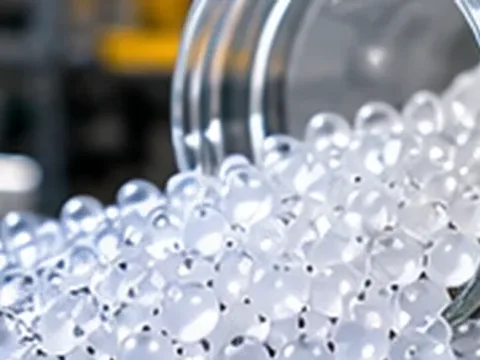
PP plastic (Polypropylene) is supplied by PlasticSetu as scrap, regrind / flakes, lumps / agglomerate, granules, compound. Manufacturers use it in packaging, agriculture, industrial, bulk handling, household, automotive. You buy from PlasticSetu: one quote, one invoice, and the sourcing desk checks each lot before dispatch.
Polypropylene (PP) is the lightest of the commodity plastics, with a density of about 0.90 to 0.91 g/cm³. It is stiff, resists most acids, alkalis and detergents, and melts at roughly 160 to 165 °C for homopolymer grades. That combination makes it the default choice for woven sacks, raffia, caps and closures, household moulding, automotive parts and furniture.
PP is sold as homopolymer (stiffest, used for raffia, fibre and general moulding), impact copolymer (better toughness, especially in cold conditions, used for crates, buckets and automotive parts) and random copolymer (clearer, used for transparent containers and some pipes). Melt flow index, measured at 230 °C with a 2.16 kg load, tells you which process a grade suits. See how to check MFI.
Read PP granules: grades, applications and how to choose before you write your requirement.
Packaging, Agriculture, Industrial, Bulk handling, Household, Automotive, Containers, Multiple applications, Recycling, Extrusion, Injection, Raffia, Appliances
Natural, White, Colour, Black, Transparent, Grey
Minimum quantity depends on the grade and lot. Tell us your trial and monthly volumes in the enquiry.
PlasticSetu buys the material from checked recyclers and producers and sells it to you. You get one quotation, one GST invoice and one point of contact.
The desk confirms the grade, colour and specs you agreed on the actual lot, and arranges photos or a sample before the bulk order.
Tax invoice, e-way bill and the lot details you agreed travel with the material.
Freight terms are written into the quotation, and the desk tracks dispatch until delivery.
Selling material? Sell to PlasticSetu: we buy scrap, regrind and granules from recyclers, aggregators and traders.
Post your requirement and get a PlasticSetu quotation, usually within a working day.
General injection moulding usually runs on PP with an MFI of roughly 8 to 25 g/10 min (230 °C, 2.16 kg). Thin-wall containers need higher flow, often 35 or more. Raffia and tape use low-MFI grades, around 2 to 4. Confirm the range with your machine and mould before you order.
Homopolymer is stiffer and slightly clearer but turns brittle in the cold. Impact copolymer contains a rubbery ethylene phase that keeps it tough at low temperatures, so it suits crates, buckets and automotive parts. Random copolymer gives better clarity.
Food-contact packaging is regulated by FSSAI, and recycled PP is normally used for non-food products such as buckets, furniture, auto parts and sacks. Check the current FSSAI packaging regulations before any food-contact use.
Post your requirement with grade, quantity, colour and delivery city, or tap Get quote on the material. The PlasticSetu sourcing desk sends you a PlasticSetu quotation, usually within a working day, with GST and freight terms stated.
Yes. Ask for samples in your enquiry and the desk arranges them for your quality check before you confirm bulk quantities.
Yes. PlasticSetu delivers across India. Every quotation states the rate, GST, freight terms, payment terms and validity.
PP plastic (Polypropylene) is used in packaging, agriculture, industrial, bulk handling, household, automotive. PlasticSetu supplies it as scrap, regrind / flakes, lumps / agglomerate, granules, compound.